Facebook Ads for SaaS companies are exactly what will bring you excellent results, and in this article I will prove it to you.
If you run a SaaS company, your biggest challenge is likely finding people who actually want what you offer. You may have tried SEO or Google Ads, hoping they’d drive results, but SEO often takes months before you see any movement, and Google Ads can quickly drain your budget.
You might also spend time posting on social networks or community platforms, thinking your next customer will discover you there — but while that might bring some visibility, it rarely brings conversions. Attracting visitors is one thing; turning them into paying subscribers is another story.
That’s where a smarter, more direct solution comes in — one that lets you focus on delivering your product while we handle bringing in people ready to try it.
Our agency specializes in connecting SaaS brands with highly relevant users through Facebook ads. We take over the technical and creative side of advertising so you can focus on scaling your product, not chasing leads.
Below, you’ll find an example of how a SaaS company struggling to get consistent traction ended up building a steady pipeline of engaged subscribers with our help
How We Approach Facebook Ads for SaaS Brands
Our process isn’t about launching campaigns overnight. Every collaboration begins with research — understanding your product, your audience, and how your users actually make decisions.
We craft visuals and ad messaging based on how your potential users think, not guesswork. Each campaign is tested and refined before scaling. Instead of burning through your budget, we focus on identifying what works and gradually expanding what converts.
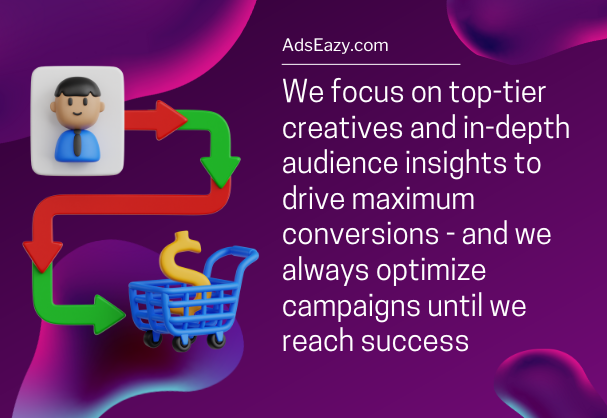
We don’t believe in running ads for the sake of impressions or likes. Every step is designed to bring measurable growth to your recurring revenue. We build precise targeting systems and monitor every key metric — from engagement rates to the lifetime value of each new user.
Our approach avoids short-term spikes. Instead, we develop sustainable systems that keep bringing results month after month.
So, are you ready to see how this worked in practice? Let’s dive into a real example
1. When Traditional Marketing Stopped Delivering
Not long ago, I had a conversation with the owner of a mid-sized SaaS company I’d known for a while. Over coffee, he told me that his usual advertising channels had become painfully expensive — and the results were flat.
He’d been using traditional digital marketing methods that, five years ago, worked incredibly well. But the same strategies were now barely keeping his funnel alive.
I told him that classic marketing still works in some spaces — but for SaaS, where competition is fierce, you need smarter targeting. That’s when I suggested we test a Facebook campaign designed specifically for his audience.
The plan was simple: start small, analyze what resonates, and scale up only after seeing clear engagement patterns. No unnecessary spending — just data-driven decisions.
He agreed, and that conversation turned into one of our most successful collaborations. What followed was a steady flow of high-quality users discovering his service through Facebook, proving once again that with the right strategy, results naturally follow
2. Small Beginnings, Big Outcomes
Every powerful campaign starts with something simple — the creative.
The most effective ads on Facebook don’t look like ads. Users scroll past anything that feels pushy or overly polished. They want something natural, visual, and human — content that fits seamlessly into their feed yet makes them pause.
That’s why our first step is always designing creatives that feel organic. They don’t scream “buy now” — instead, they spark curiosity.
The next step is understanding who we’re talking to. The tone, visuals, and message all depend on that. A 19-year-old browsing for trendy sneakers won’t respond to the same design as a professional searching for a SaaS tool to optimize their workflow. Each audience requires a different language, rhythm, and creative flow.
This way of thinking — blending design psychology with human behavior — is what makes our creatives stand out. It’s the reason they perform so well
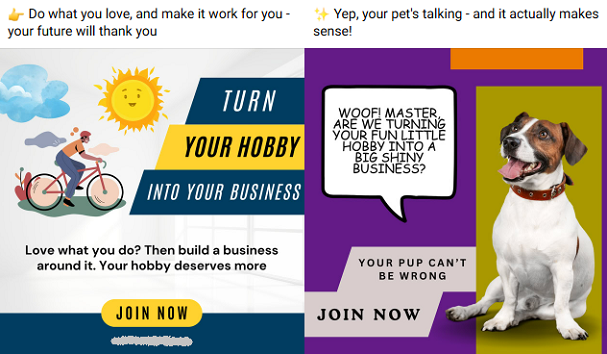
If you’re running an online store or SaaS brand, think about how to make your message feel different. Your visuals should blend storytelling with subtle selling. The worst mistake is to look like everyone else — that’s how good products go unnoticed.
3. Why Old Advertising Tactics Fail
Many of our clients come to us worried that their old ad strategies have stopped working. And to be fair — they’re often right. The truth is, most traditional digital ads were built for an algorithm that no longer exists.
But our team thrives on adaptation. Even when Facebook changes its algorithmic logic, we stay ahead by focusing on timeless principles: relevance, psychology, and message clarity.
Trying to handle all of this alone can take months of testing (and money lost). That’s why many businesses never see results when running ads on their own — they underestimate how complex the ecosystem has become.
Let’s take a real example of a SaaS company we worked with that faced this exact issue — and what happened next.
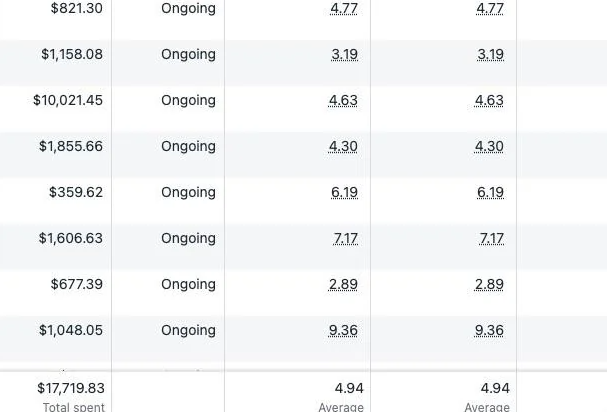
We managed to turn a $17,463 ad spend into over $85,000 in revenue — a 4.88 ROAS. The strategy wasn’t magic; it was methodical and data-driven.
4. Behind the Strategy: How We Reached Those Numbers
Facebook’s environment has evolved dramatically. What worked five years ago doesn’t work today. But we don’t chase trends — we build repeatable frameworks.
We began by launching broad targeting campaigns to test how different creatives connect with users. Each week, we added 5–8 new visuals and removed underperformers, gradually identifying the “winners.” Once 2–3 creatives proved consistent, we scaled those — carefully and strategically.
After the initial phase, we analyzed engagement over 7 and 14 days. Then we re-engaged users who clicked, browsed, but didn’t act. We built new ads tailored to their questions and objections — gently leading them back toward conversion.
Our golden rule: keep investing in creatives that win. If the ROAS remains stable for several days, that’s the signal to scale.
5. Where Algorithms Meet Human Behavior
While technology changes constantly, human psychology doesn’t. Before 2022, success on Facebook depended heavily on audience targeting. Today, the creative is your targeting.
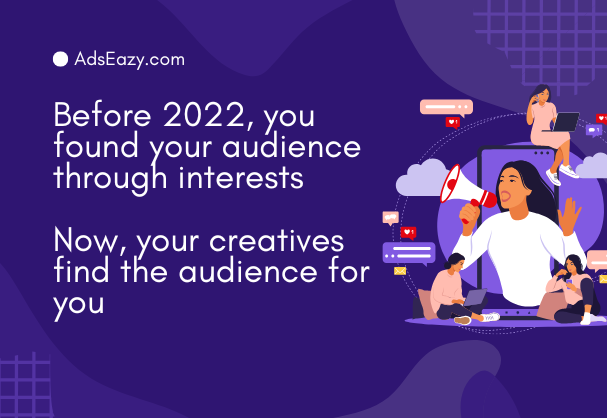
In one of our SaaS campaigns, we built creatives so precisely aligned with user intent that traditional targeting almost didn’t matter. The ads themselves filtered the audience — they resonated instantly with people who needed that specific product.
We spoke directly to their frustrations, doubts, and motivations — all within a single creative. It’s not easy to capture that emotional nuance in one short ad, but when done right, it works better than any interest filter.
The takeaway? If your creative can communicate a complex idea simply, and people “get it” within seconds, you’ve already won half the battle.
6. Key Lessons To Remember
Your audience doesn’t react to random visuals. They respond to triggers — emotional cues that match their reality. That’s why testing content formats (UGC, short videos, before/after demos, testimonials, data-based visuals) is essential.
Start wide, test multiple concepts, and filter until only 2–3 consistent performers remain.
Your best creatives usually show pain → solution → result. Show the challenge first, then the transformation your product brings.
And don’t ignore technical control — like setting proper bid caps. For instance, if your break-even CPA is $50, setting a $45 cap keeps profitability intact and helps you stay competitive in auctions.
Quick guide to bid caps:
1. Identify your break-even CPA.
2. Set bids 5–15% below that level.
3. Use a budget roughly 10–20x your bid.
4. Gradually scale if impressions are too low.
Common pitfalls:
● Starting with limits that are too tight.
● Scaling budgets too fast.
● Miscalculating break-even points.
● Assuming higher bids can fix weak creatives or funnels.
Scaling properly means growing slowly — increasing bids by 10–20% daily while monitoring CPR. The bid itself \ becomes your control lever: the higher the bid, the higher the volume.
Final Thoughts
Facebook advertising remains one of the most cost-efficient and adaptable marketing tools available. Nothing else brings traffic this targeted, this fast.
If you’re looking for measurable growth, waiting on SEO or overpaying for Google clicks won’t cut it. For smaller and mid-sized brands, Facebook is where momentum happens.
Our agency handles everything — from creative production to testing and scaling — so that you can focus on what matters most: your product and your customers.
While you build your business, we make sure people find it.
If you’re ready to see how this can work for you, reach out — we’ll handle the rest.